A healthy green lawn enhances a property’s appearance, provides a comfortable outdoor space, and complements gardens, walkways, and patios. In Arlington, Virginia, homeowners and property managers must consider seasonal weather changes, soil conditions, sunlight exposure, and regular lawn maintenance when establishing new grass. Choosing the right grass and preparing the ground properly are essential for creating a lawn that establishes evenly and remains attractive.
Working with a sod farm in Arlington, VA helps property owners explore fresh turf options suited to their landscaping requirements. Unlike seeding, which requires time for grass to germinate and fill in, sod provides an established layer of grass and soil that can develop roots in the prepared ground. With proper installation, watering, and ongoing care, fresh sod creates an attractive lawn more quickly than starting entirely from seed.
Why Choose Fresh Sod for Arlington Properties?
Fresh sod provides an immediate improvement in the appearance of bare or damaged areas. It is useful for new residential construction, landscape renovations, commercial properties, and lawns affected by heavy use or construction activity.
Sod also offers practical advantages when installed correctly. The established grass provides ground coverage, helping reduce exposed soil and limiting erosion caused by rainfall. As the roots grow into the underlying soil, the lawn becomes more stable and better integrated with the landscape.
However, successful establishment depends on selecting suitable grass varieties and preparing the site properly. Arlington’s climate includes warm summers, cold winters, and seasonal rainfall variations. Grass selection should account for sunlight, soil drainage, expected foot traffic, and the amount of maintenance you can provide.
How to Select the Right Sod
Consider Grass Variety and Sunlight
Different turfgrass varieties perform differently under varying conditions. Tall fescue is widely used in Virginia because it tolerates a range of conditions and develops a relatively deep root system when properly maintained. Other grass types may suit particular sites depending on shade, soil, and intended use.
Before ordering sod, assess how much direct sunlight the lawn receives throughout the day. Shaded areas require different considerations from open spaces exposed to intense summer sunlight.
Evaluate Soil and Drainage
Healthy turf depends on suitable soil conditions. Compacted soil, poor drainage, and uneven grading can prevent roots from establishing properly.
A soil test helps identify drainage problems and potential nutrient deficiencies. It also determines soil pH and nutrient levels, helping you decide whether lime or fertilizer is needed. Correcting these issues before installation creates a better environment for root development and long-term lawn health.
Check Freshness and Delivery Timing
Fresh sod should arrive in good condition and be installed promptly. Prolonged storage, particularly in warm weather, can cause the grass to heat up and deteriorate.
Coordinate delivery with site preparation so the sod can be laid as soon as practical. Avoid ordering substantially more turf than the project requires, although a small allowance for trimming and irregular edges helps reduce shortages.
To calculate the amount needed, measure the lawn’s length and width in each rectangular section and multiply them to determine the square footage. Add the measurements for all sections, then divide the total area by the supplier’s square-foot coverage per pallet to determine how many pallets to order. For example, a 1,280-square-foot lawn requires two standard 640-square-foot pallets. Pallet coverage varies by supplier, so confirm the actual coverage before placing an order. Premier Turf Farms offers standard 640-square-foot pallets and custom sizes.
Plan Installation Around the Season
For tall fescue and other cool-season grasses commonly used in Arlington, fall and spring are generally the preferred seasons for sod installation because temperatures are more favorable for root development. Late summer to mid-fall is particularly suitable for establishing cool-season turf.
Sod can also be installed during other seasons when conditions permit, provided the ground is not frozen and adequate irrigation is available. Avoid installation during extreme summer heat or drought whenever possible, as these conditions increase moisture stress and can make establishment more difficult. If installation during hot weather is necessary, prepare the soil properly and water the sod immediately and consistently.
Benefits of Installing Fresh Sod
Immediate Lawn Coverage
Sod transforms bare soil into a green landscape as soon as installation is complete. This is especially valuable for property owners preparing outdoor areas for regular use or improving the appearance of newly constructed buildings.
Reduced Soil Erosion
The grass and root mat cover exposed soil and help hold the surface together. This reduces erosion risks on suitable sites, although steep slopes and areas with concentrated runoff may require additional erosion-control measures.
More Predictable Establishment
Because sod arrives as established turf, it eliminates the germination stage associated with seed. Results still depend on soil preparation, adequate watering, suitable weather, and proper installation.
Improved Landscape Usability
Once the roots establish and the lawn is ready for use, a sodded area provides space for outdoor activities, landscaping features, and everyday enjoyment. Following recommended establishment guidelines prevents premature wear.
Preparing Your Property for Sod Installation
Before installation, remove existing weeds, debris, and unwanted vegetation. Grade the area to create a reasonably even surface while directing water away from buildings. Loosen compacted soil and incorporate suitable amendments when supported by soil conditions.
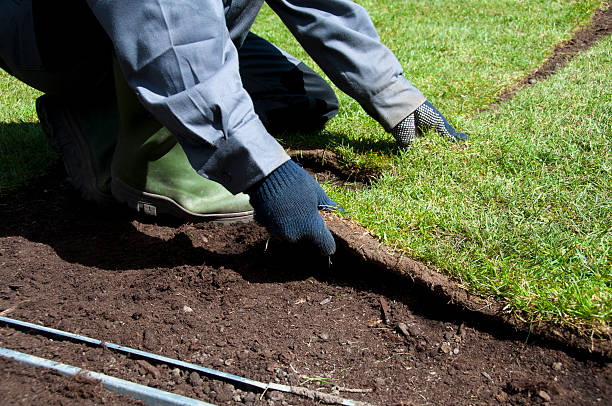
Lay sod pieces closely together without overlapping them. Stagger the seams between rows to reduce continuous gaps, and trim edges neatly around pathways and planting beds. After installation, water thoroughly so the sod and underlying soil receive sufficient moisture.
Caring for Newly Installed Sod in Arlington, VA
Watering is particularly important during the first few weeks. Keep the root zone consistently moist without creating waterlogged conditions. Adjust irrigation according to temperature, rainfall, soil type, and the grass variety.
Follow a tapering watering schedule during establishment:
-
Immediately after installation: Water thoroughly to moisten the sod and the soil beneath it. Begin watering sections as soon as they are installed, particularly during hot weather.
-
Days 1–3: Water daily, checking the soil beneath the sod to ensure it remains moist. During hot, dry, or windy weather, additional watering may be necessary.
-
Days 4–7: Continue watering daily as needed, adjusting the frequency according to rainfall, temperature, and soil moisture. Avoid allowing the sod to dry out.
-
Weeks 2–3: Check whether roots are establishing by gently tugging a corner of the sod. As the sod becomes firmly rooted, gradually reduce watering frequency and increase the depth of watering to encourage deeper root development.
-
After establishment: Transition to deeper, less frequent watering, ensuring that moisture reaches approximately 3–4 inches into the soil. Adjust according to weather and the lawn’s needs.
These timings are general guidelines rather than fixed rules. Premier Turf Farms recommends keeping newly installed sod watered for at least two weeks, with the first three to four days being particularly important. Actual watering requirements depend on conditions, so check soil moisture regularly and contact the farm for advice specific to your installation.
Avoid heavy foot traffic until the roots have established. Once the lawn begins growing actively, follow appropriate mowing practices and avoid removing too much grass in a single cut.
For the first mowing, wait until the sod has rooted sufficiently and the soil is dry enough to support the mower without leaving ruts. Check rooting by gently tugging a corner of the sod; resistance indicates that roots are beginning to anchor into the soil. For tall fescue, allow the grass to reach approximately 3 inches before the first mowing, then cut it to about 2–2.5 inches. Keep the mower blade sharp and never remove more than one-third of the grass blade in a single mowing. Seasonal fertilization should reflect soil test results and the selected turfgrass’s needs.
Conclusion
Fresh sod offers Arlington property owners an efficient way to establish attractive lawns, cover exposed soil, and improve outdoor spaces. Choosing a suitable grass variety, preparing the ground, and providing consistent establishment care are essential for lasting results.
Assess your lawn’s sunlight, soil, drainage, and intended use before choosing turf. Contact a qualified sod supplier to discuss grass options, delivery timing, and installation requirements for your property.