Most storm-related tree damage doesn’t begin when the wind starts blowing. Instead, in many cases, the problem has been developing for years. A large limb grows beyond its natural support capacity while deadwood accumulates high in the canopy. A tree may become increasingly unbalanced after seasons of growth. Under normal conditions, these issues may go unnoticed. Once strong winds arrive, however, existing weaknesses have a way of revealing themselves.
For homeowners in Haines City, preparing trees before storm season can be just as important as securing windows or inspecting the roof.
Storm Damage Often Starts with Structural Defects
Not every dangerous tree looks unhealthy. Some of the highest-risk defects are found in trees that appear green, mature, and otherwise stable. Cracked branch unions, included bark between competing leaders, and oversized limbs extending over roofs frequently become failure points during severe weather.
The challenge is that these defects are often hidden beneath dense foliage. A tree can look perfectly healthy from the street while carrying structural weaknesses capable of causing significant property damage during a summer storm. This is one reason professional tree trimming in Haines City, FL is often scheduled before hurricane season rather than after it.
Live Oaks Require a Closer Look Than Many Homeowners Realize
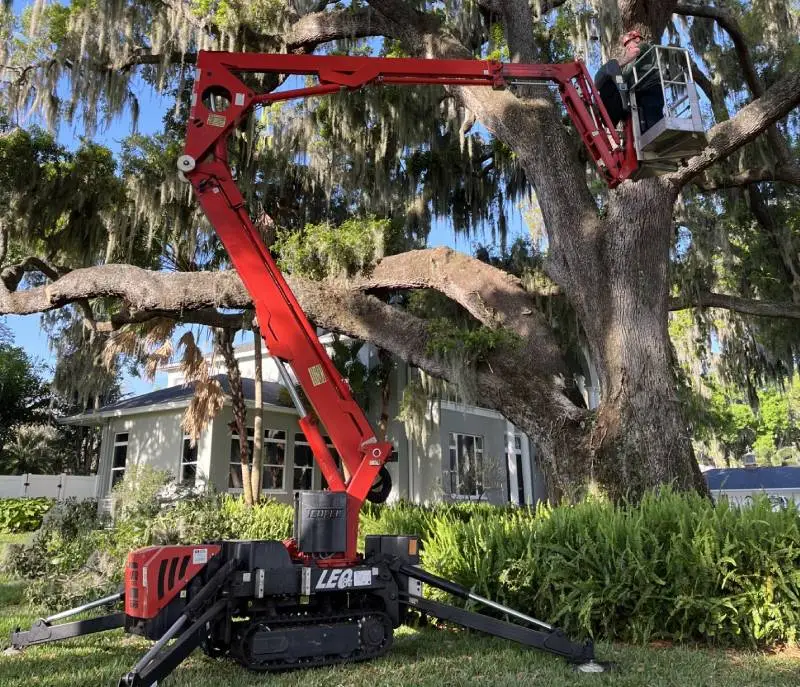
Live Oaks are among the most recognizable trees in Central Florida. Their broad canopies provide tremendous shade, but that canopy can also become a liability when growth is left unmanaged. Long lateral branches may extend significant distances over homes, driveways, and outdoor living areas.
As those branches grow heavier, wind forces increase dramatically during storms. Strategic canopy thinning can reduce wind resistance while allowing the tree to maintain its natural appearance. The goal is not aggressive cutting. The goal is creating a stronger canopy structure that performs better under storm conditions.
Southern Pines Present a Different Risk Profile
Southern Pines behave differently than Live Oaks. In many cases, concerns are less about long horizontal limbs and more about height, crown density, and overall stability.
Trees growing in crowded conditions may develop taller, narrower growth patterns as they compete for sunlight. During periods of saturated soil and high winds, that growth habit can increase stress throughout the tree.
Dead branches are another common concern. Pine limbs often remain attached long after they have died. This creates hazards that may not become obvious until strong winds begin moving through the canopy.
What Homeowners Usually Notice Too Late
There are many warning signs of tree failures that may need tree trimming in Haines City, FL. Branches rubbing against each other, limbs hanging over rooflines, visible deadwood, and uneven canopy development often indicate areas that deserve attention. After major storms, it is common to find damage originating from problems that were present long beforehand.
Properties with mature trees benefit from periodic evaluations because growth patterns change over time. A branch that posed little concern five years ago may now extend directly over a roof, driveway, or utility line.
The Objective Is Risk Reduction, Not Maximum Cutting
One of the more common misconceptions about storm preparation is that removing large portions of a canopy automatically makes a tree safer.
In reality, excessive trimming can weaken trees and encourage undesirable growth patterns. Effective storm preparation focuses on selective pruning, deadwood removal, canopy balance, and structural improvement.
When performed thoughtfully, tree trimming in Haines City, FL, helps reduce the likelihood of branch failure while preserving the long-term health of the tree. By the time tropical systems begin moving across Florida, the opportunity to address many structural issues has already passed. Preparing trees before storm season with the help of a certified arborist remains one of the most practical ways to reduce potential damage to homes, vehicles, and surrounding property.