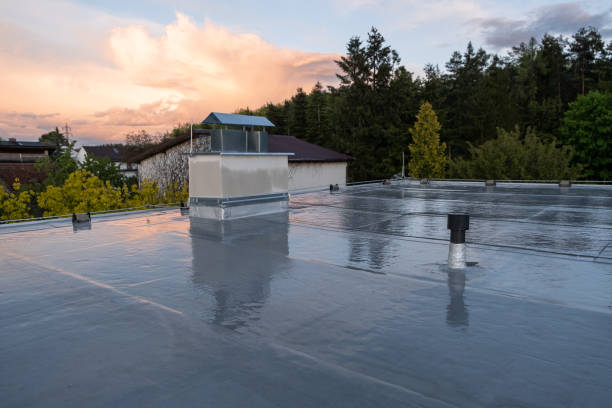
Waterproofing products are often compared on a data sheet as if they were used in a laboratory. A roof in the tropics is a harsher test: intense sunshine, surface temperatures that climb well above air temperature, and sudden storms that drop large volumes of rain within an hour. Choosing between methods for flat roof waterproofing Singapore work makes more sense when each option is judged against these conditions, rather than against general claims about durability that may have been measured in a temperate climate with gentler seasons.
The Climate Writes the Specification
Singapore receives rainfall in every month, with the northeast monsoon bringing prolonged wet spells around the turn of the year and the inter-monsoon periods producing short, violent afternoon thunderstorms. Humidity stays high, so surfaces dry slowly. Any waterproofing method must therefore resist standing water, tolerate application windows that close quickly, and survive constant ultraviolet exposure. A product that performs well in these respects will usually perform well elsewhere, but the reverse is not guaranteed.
Heat Cycles and Movement
A dark roof surface can become extremely hot by mid-afternoon and then be cooled abruptly by rain. This daily cycle makes the slab expand and contract, flexing every joint and crack. Membranes need enough elongation to follow that movement without tearing, and enough adhesion to stay bonded while doing so. Rigid coatings that perform well in a stable environment often crack within a few years on an exposed tropical roof, which is why flexibility features so prominently in sensible local specifications.
Torch-On Bituminous Membranes
Modified bitumen sheets, typically APP or SBS grades, are heat-welded to a primed slab. Their thickness gives good resistance to punctures and to the occasional misplaced ladder. SBS grades remain more flexible, while APP grades are often chosen for their tolerance of heat and sunlight. Their weaknesses are seams, which depend on skilled torching, and complex details where cutting and folding sheets around pipes is fiddly. A mineral-surfaced cap sheet protects against ultraviolet degradation on exposed roofs.
Liquid-Applied Polyurethane Systems
Polyurethane membranes are rolled or sprayed in coats that cure into a continuous, highly elastic skin. Because there are no laps, they handle irregular roofs and crowded penetrations well, and they can be reinforced with fabric at cracks and corners. Their success depends on correct film thickness and dry substrate conditions, both of which should be checked during application. Aromatic polyurethanes need a UV-resistant top coat to avoid chalking, while aliphatic versions resist sunlight better at a higher cost.
Acrylic and Elastomeric Coatings
Water-based acrylic coatings are easy to apply, low in odour and often light-coloured, which reflects heat. They suit roofs with good falls and little standing water, but many acrylics soften under prolonged ponding. They are commonly used for refurbishing sound existing roofs or as reflective top coats over other systems. If your roof drains poorly, a contractor experienced in tropical flat roof waterproofing should either correct the falls first or recommend a product specifically rated for ponding conditions.
Cementitious Waterproofing
Cement-based coatings, including polymer-modified flexible grades, bond strongly to concrete and tolerate damp surfaces better than most alternatives. That makes them practical when drying windows are short. They are frequently used under tiles, screeds or planters, where they are shielded from direct sunlight and foot traffic. On an exposed roof their limited flexibility is a drawback, so they are better seen as one layer within a protected build-up than as a standalone finish left open to the weather.
Single-Ply Sheet Membranes
PVC and TPO membranes are factory-made sheets joined by hot-air welding, more familiar on large commercial and industrial roofs. They offer consistent thickness, good reflectivity and seams that can be tested along their full length. Installation needs specialised equipment and trained crews, and detailing on small, cluttered residential roofs can be awkward. On big, simple roof areas, however, they can be fast to install and less dependent on the weather during application than wet-applied products.
Cool Roof Top Coats
Reflective top coats reduce surface temperature by bouncing back a large share of the sun’s energy. On a flat roof this lowers heat stress on the membrane underneath and can reduce heat gain into the rooms below. They are not waterproofing systems on their own, and they lose effectiveness as dirt and algae build up. Treated as a protective final layer that is cleaned and renewed at intervals, they extend the working life of the system beneath and can make upper floors more comfortable.
Matching Method to Roof Use
A roof that nobody walks on can use a lighter exposed system. A terrace with tiles or planters needs a membrane suited to being buried, plus protection and drainage layers above it. A roof carrying water tanks, condensers or solar panels needs puncture resistance and careful sealing at every support. Defining how the roof will be used over the next ten years often narrows the choice more quickly than comparing products in isolation, and it prevents costly changes later.
Making a Final Choice
No single method is best for every Singapore roof. Weigh the roof’s falls, its existing condition, how it will be used and how much maintenance you can realistically commit to. Ask each contractor to explain why their recommended system suits your particular roof and how they will manage moisture and weather during application. A provider of flat roof waterproofing systems who can compare at least two options honestly, including their weaknesses, is giving you the information needed to decide well.