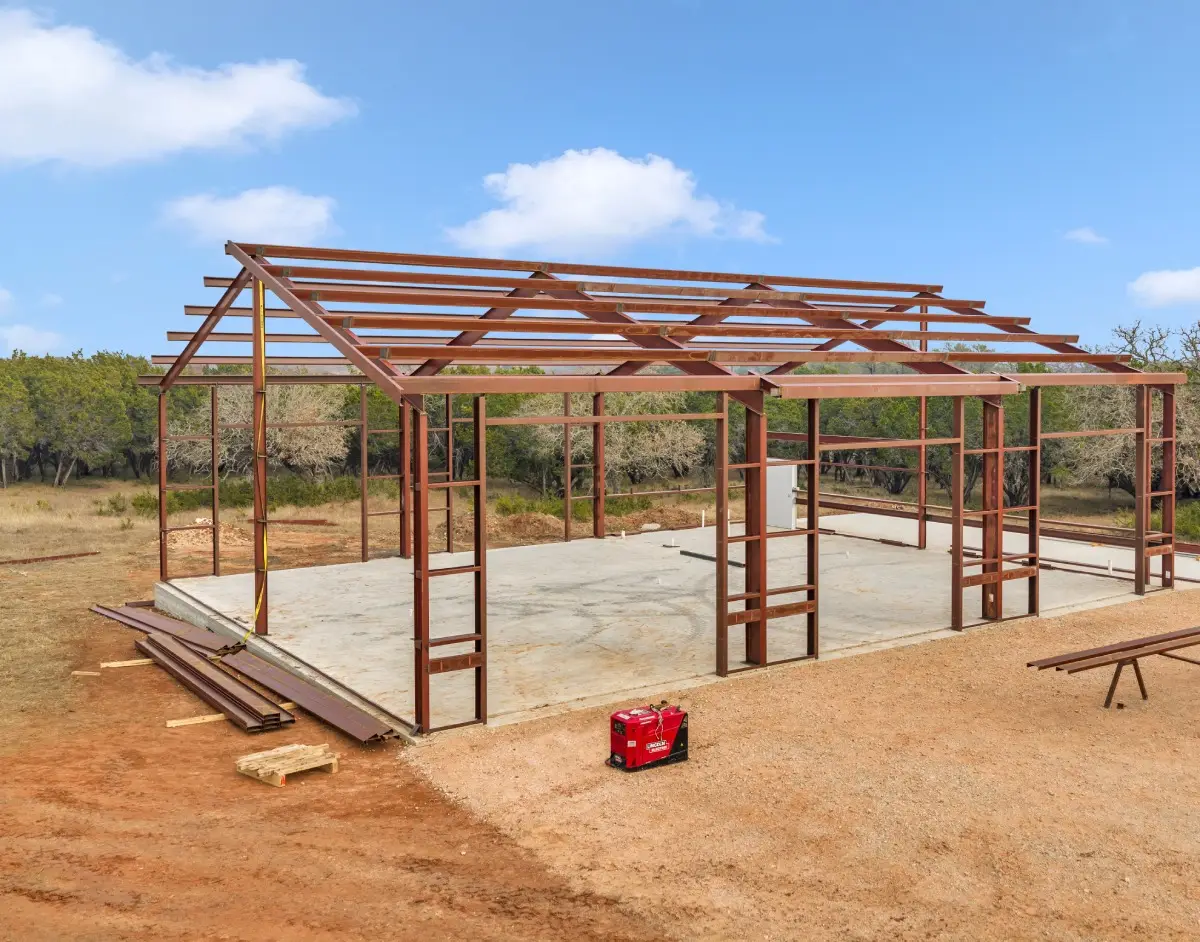
Take a drive through the countryside around Lampasas and it becomes fairly obvious that ranch buildings rarely serve a single purpose for long. In many cases, the use of the space changes according to evolving family and commercial needs.
What begins as equipment storage may eventually house livestock supplies, recreational vehicles, trailers, feed, fencing materials, or a workshop. As operations change, the building often has to change with them.
That flexibility is one reason engineered metal buildings in Lampasas, TX, have become a common sight across Central Texas ranch properties. Many ranch owners prefer this type of building for the immense flexibility on offer.
Ranch Storage Needs Tend to Grow Faster Than Expected
Many landowners start with a specific goal in mind. Perhaps the building is intended for tractor storage or a place to keep equipment out of the weather. But a few years later, additional trailers arrive. Tools need organized storage. Hay requires protection or a workbench gets added.
The challenge isn’t usually finding a building for today’s needs. It is choosing an option that still works when those needs evolve over time. Large open interiors have made engineered steel structures appealing for that reason alone. Interior support posts aren’t constantly competing with trailers, implements, or equipment for usable space. The result is clear-span construction in which steel rigid frames carry the roof without interior columns. Clear spans of 30 to 60 feet are common, and wider spans are available for larger equipment.
Texas Weather Doesn’t Go Easy on Buildings
A ranch building spends its entire life exposed to the elements. Summer temperatures can be relentless while intense thunderstorms arrive with little warning. Also, wind-driven rain has a way of finding weaknesses in poorly designed structures.
Over time, those conditions reveal the difference between a building that was designed for long-term use and one that struggles with constant repairs. This is why engineered metal buildings in Lampasas, TX, have become common across ranch properties. Steel framing provides structural strength while metal roofing and siding systems are designed to withstand the kinds of weather conditions Central Texas regularly experiences. In Central Texas, engineered metal buildings are typically designed for basic wind speeds of 105 to 115 mph, based on ASCE 7 three-second gust requirements.
Maintenance Has a Way of Multiplying Across Rural Properties
A single repair project rarely stays single for long. A gate needs attention while a water trough requires replacement. Often, fence repairs move higher on the priority list. Also, equipment maintenance never completely goes away. Against that backdrop, building maintenance becomes another item competing for time and resources.
Steel structures in engineered metal buildings in Lampasas, TX, appeal to many ranch owners. They generally demand less attention than materials that are prone to warping, insect activity, or recurring exterior repairs. Reducing maintenance by even a small amount each year can make a noticeable difference on larger properties.
Fire Concerns Influence Building Decisions
In rural settings, response times can be different than those in densely developed areas. That reality influences the way many landowners evaluate construction materials. Workshops often contain equipment, fuel, tools, and machinery that represent a significant investment.
Steel’s non-combustible nature doesn’t eliminate risk, but it remains one factor that frequently enters the conversation when property owners compare safer building options.
The Best Ranch Buildings Adapt Over Time
Few ranches operate exactly the same way decade after decade. Equipment changes and storage demands increase due to shifting priorities. Some of the most successful buildings in Lampasas County are not necessarily the largest or most elaborate. They’re the ones that remain useful as the property evolves.
A structure that stores equipment today may become a dedicated workshop a few years from now. Another might transition from agricultural use to recreational storage. That ability to serve different purposes over time is often what makes an engineered metal building a practical long-term investment rather than simply another outbuilding on the property.